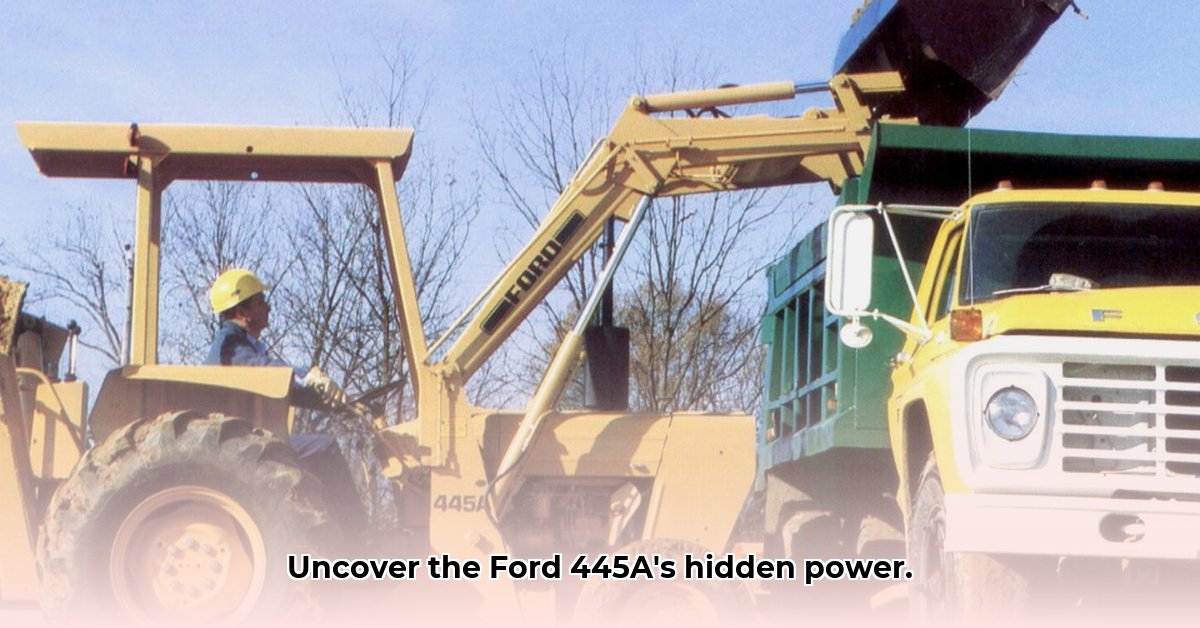
Ford 445 vs. Ford 445A: A Detailed Comparison
The Ford 445 and 445A tractors, manufactured between 1979 and 1988, represent reliable workhorses for various agricultural applications. For more information on similar Ford tractors, check out this useful resource: Ford Tractor Data. This detailed comparison guide aims to help collectors, historians, potential buyers, and parts suppliers understand the key differences and similarities between these two models. We'll delve into engine specifications, hydraulic systems, PTO options, and more, providing a data-driven assessment to inform your decision-making process. Is the extra horsepower of the 445A worth the potential increase in maintenance costs? Let's find out.
Specifications Comparison Table
The following table compares key specifications of the Ford 445 and 445A tractors. Note that obtaining precise data for specific features may require consulting resources like TractorData.com. This table provides a framework to be populated with accurate details.
| Feature | Ford 445 | Ford 445A | Notes |
|---|---|---|---|
| Engine Type | 3-Cylinder Diesel | 3-Cylinder Diesel | Specific model numbers needed from Tractordata.com |
| Engine HP | 47 hp | 48 hp | Slight increase in horsepower in the 445A |
| Hydraulic System | Open-center | Open-center, higher flow rate | 445A offers improved hydraulic performance |
| PTO (Power Take-Off) | 540 RPM | 540 RPM | Both models offer standard 540 RPM PTO. |
| Transmission | (Specify from Tractordata.com) | 6 or 8 speed (options) | 445A offers transmission choice flexibility |
| Wheelbase | (Specify from Tractordata.com) | (Specify from Tractordata.com) | Measurement in inches/cm |
| Weight | (Specify from Tractordata.com) | (Specify from Tractordata.com) | Weight in lbs/kg |
| Three-Point Hitch | (Specify from Tractordata.com) | (Specify from Tractordata.com) | Lift capacity and type of hitch. |
| Dimensions | (Specify from Tractordata.com) | (Specify from Tractordata.com) | Length, width, and height |
Detailed Analysis of Key Differences
The most significant differences lie in engine power and hydraulic system performance. The 445A's extra horsepower, although seemingly marginal, translates to improved performance in demanding tasks. This is particularly noticeable when operating heavier implements or working on challenging terrain. Similarly, the enhanced hydraulic flow rate of the 445A ensures smoother operation of attachments and quicker cycle times. The additional transmission options in the 445A provide enhanced control and versatility for varied agricultural tasks. How significant are these differences in real-world application? Consider the time savings and increased efficiency that the 445A might offer compared to the 445.
Strengths and Weaknesses of Each Model
Ford 445:
- Strengths: Simpler design may lead to lower initial cost and easier maintenance. Proven reliability over time.
- Weaknesses: Lower horsepower and hydraulic capacity may limit its suitability for heavy-duty work. Older models may require more frequent maintenance.
Ford 445A:
- Strengths: Increased horsepower and improved hydraulics provide greater versatility and performance. Transmission options enhance maneuverability.
- Weaknesses: More complex design potentially leading to higher repair costs. Parts availability might be a concern depending on location.
Parts Availability and Maintenance
Parts availability is a critical factor to consider. The age of these tractors necessitates careful assessment of the parts market. Online forums dedicated to Ford tractors, along with specialized agricultural parts suppliers, are vital resources for locating necessary components. Proactive preventative maintenance is crucial to prolong the lifespan of either model.
Conclusion: Choosing the Right Tractor
Selecting between the Ford 445 and 445A depends entirely on the user's priorities and intended applications. The 445A provides superior power and hydraulic capacity, enhancing efficiency in demanding situations. However, the 445 offers a simpler, potentially more affordable option for users with less demanding needs. Ultimately, the best choice requires careful consideration of budget, anticipated workload, and local parts availability. Thorough research and a realistic assessment of your needs are vital for a successful purchase.
Appendix: Additional Resources
- TractorData.com – Comprehensive database of tractor specifications.
- (Add links to relevant Ford tractor forums and parts suppliers here)